Ohio Valley Parent article
November 2007
WLSC SMART-Center
Easy
As Pumpkin Pie
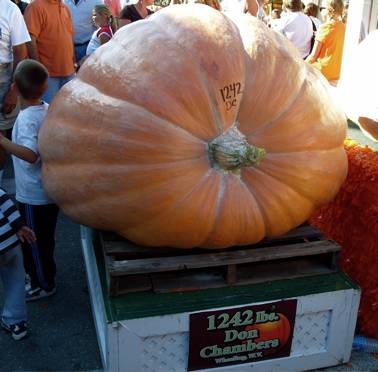
Pumpkins are an original American food. The wild ancestor of today’s pumpkins goes back to the Aztec, Inca, and Mayan civilizations. The pumpkin had already spread northward from Central and South America by the time European settlers reached the New World. Since the time of the settlers’ arrival, the pumpkin has been grown and used in many ways. Jack-O-Lanterns and other decorations for fall holidays are common uses of the pumpkin. Growing giant pumpkins is a hobby for some people. Don Chambers of Warwood grew this giant pumpkin (see photo) that placed second at the Barnesville Pumpkin Festival in September. It weighed in at 1242 pounds! That’s some pumpkin!
Pumpkin Pie History
Pumpkins, of course, are perhaps best known for their role in the holiday season’s pumpkin pies and other deserts. We now have many recipes for pumpkin pie, but the first pumpkin pie did not have crust as we know it today. The “pie” probably cooked in the pumpkin itself. The early pilgrims may have served pumpkin “pie” at the second Thanksgiving. They had received pumpkins from the Native Americans, so pumpkin was definitely available and likely on the menu. They may also have used other ingredients they had available to make the “pie”. Maple syrup was perhaps used in their recipe. To make a pumpkin pie much like the pilgrims may have made, try the following recipe. Be sure to get an adult to help you. This type of pie was also a favorite of the first president of the United States, George Washington. (Recipe and information from the cookbook The Frugal Gourmet Cooks American by Jeff Smith)
Baked Whole Pumpkin
To make this early American treat, you will need:
1) 1 pumpkin 2 to 3 kilograms (5-7 pounds)
2) 6 whole eggs
3) 500 ml (about 2 cups) whipping cream (canned evaporated milk may be substituted)
4) 125 ml (0.5 cup) brown sugar
5) 15 ml (1 tablespoon) molasses
6) 2.5 ml (0.5 teaspoon) nutmeg
7) 5 ml (1.0 teaspoon) cinnamon
8) 30 ml (2.0 tablespoons) butter
9)
Here is what you will need to do:
1) Cut the “lid” of the pumpkin like you are going to make a Jack-O-Lantern.
2) Take the seeds out of the pumpkin. (You can save them to toast later. Native Americans loved the rich toasted pumpkin seeds. OVPM October 2007 has a great recipe on page 8)
3) Mix together the rest of the ingredients (except the butter).
4) Place the pumpkin in a baking dish and fill the pumpkin with the mixture.
5) Top the mixture with the butter.
6) Cover the pumpkin with the “lid”.
7) Bake your pumpkin “pie” for 1 to 1.5 hours at 177 degrees Celsius (350 degrees Fahrenheit) or about until the mixture is set like a custard.
Serve the pumpkin pie straight from the pumpkin at your Thanksgiving table, scraping some of the cooked pumpkin out with each serving of custard.
The eggs in the custard are important in the science of making custard. The proteins in the eggs are like long coiled strings. These strings sort of “unwind” during cooking due to the heat. The strands of protein attach to one another. This creates a net of protein strands that traps the milk or cream and makes the custard set. Yum!
Pumpkin Nutrition
Both the seeds of the pumpkin and the pumpkin itself are actually good for you! The seeds contain essential amino acids (these build proteins) and zinc (a mineral that is good for your body). Pumpkin seeds also contain iron (a mineral) and fiber (good for digestion). The bright orange color of the pumpkin lets us know that it is high in beta-carotene, which changes to Vitamin A (good for vision among other things). The compounds in pumpkins called anti-oxidants help strengthen our immune systems and keep us healthy. Pumpkin by itself (without sugar, cream, or eggs!) is also a low calorie snack. Try cooking it with a little cinnamon or other spices. It is also very tasty in muffins, pancakes, and other foods.
For more information about food science, visit the Inquisitive Cook website at the Exploratorium— http://www.exploratorium.edu/cooking/icooks You may think of other interesting and nutritious pumpkin recipes. Experiment with different ingredients and enjoy yummy results!
.
Robert E. Strong is the director of the West Liberty State College SMART-Center, the hands-on science center of the Northern Ohio Valley. Libby Strong is the Program Coordinator at the West Liberty State College SMART-Center and also directs the WV-Handle On Science Program that brings hands-on science kits to the public school classrooms of the Northern Panhandle. Richard Pollack is the assistant program coordinator, webmaster, and technology specialist for the WLSC SMART-Center. Robert, Libby, and Richard invite you to visit the website at www.smartcenter.org