SMART Science
March 2009
An Egg-cellent Greenhouse
We are getting closer and closer to Spring when the sun comes up earlier, days become warmer, and farmers and gardeners get excited about what they will be planting soon. Starting plants indoors can give them a head start and allow them to grow up a little bit before being planted outside in your garden. Gardeners are usually very good at recycling. For example, they know that food scraps and plant clippings can be “composted” to become rich garden soil. See a SMART Science article about composting at http://www.smartcenter.org/ovpm/march-07.htm
Here is another fun way to recycle and give young plants a good start. Special thanks to the young gardeners from Mrs. Pollack’s PK-4 Class at Our Lady of Peace School.
1. When you use eggs for breakfast, crack them carefully and save the bigger “half”.
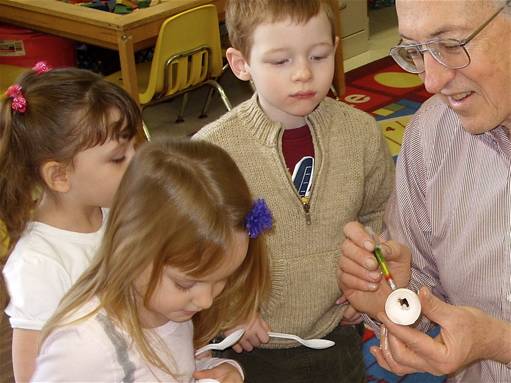
2. Working from the inside of the shell, use a dull pencil to make a good size hole in the bottom.
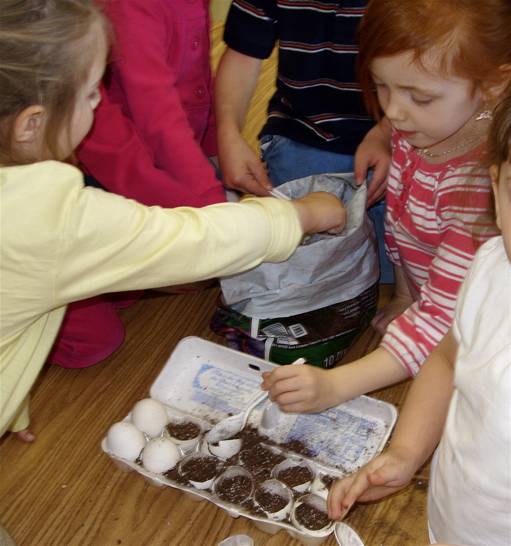
3. Fill each egg shell “pot” with a good potting soil or seed starter mix.
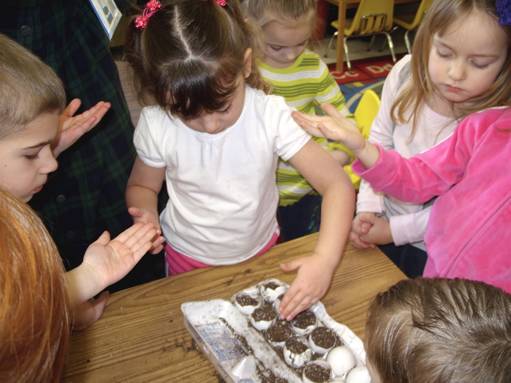
4. Put one or two seeds into the soil just below the surface and gently firm the soil.
5. Moisten the soil by pouring water into the bottom of the egg carton. It will soak up into the soil.
6. Have your parents help cut out the top of the egg carton. Tape on plastic wrap to make a “greenhouse”
7. Place your greenhouse where it can get morning sunlight. Don’t let it get too much direct sun.
It is very important not to put young and tender plants into the ground too early in Spring. There can be cold nights with frost even if it seems to be warm enough. In the area of the country where we live the last day of frost is usually May 15th. Be patient and wait until after that date to plant.
As you put each egg shell pot into the ground, crush it to allow the roots to easily spread out. The shell will become part of the soil, adding some important minerals. You will be surprised to see your young “seedlings” grow into beautiful flowers or delicious and healthful vegetables!
Robert E. Strong is the
director of the West Liberty State College SMART-Center, the hands-on science
center of the Northern Ohio Valley.
Libby Strong is the Program Coordinator at the West Liberty State
College SMART-Center and also directs the WV-Handle On Science Program that
brings hands-on science kits to the public school classrooms of the Northern
Panhandle. Richard Pollack is the
assistant program coordinator, webmaster, and technology specialist for the
WLSC SMART-Center. Robert, Libby,
and Richard invite you to visit the website at www.smartcenter.org